Knee pain is a lot like back pain: it feels like everyone has it, and not many people really understand what they can do about it. Many people are told, often by trusted sources, that they simply have to live with it because they're "getting older." If that sounds like you, understanding the basic anatomy of the knee — the joints, ligaments, muscles, and other structures involved — makes it a lot easier to understand why it hurts and what can be done about it.
The Joints
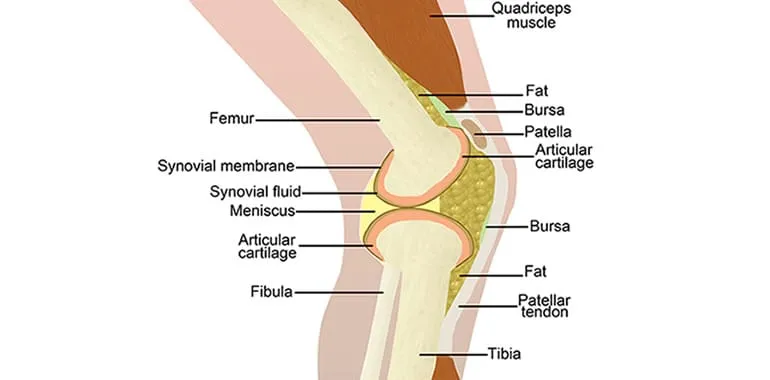
Although most people think of the knee as one joint, it's actually made up of three. The main joint is where the femur (thigh bone) meets the tibia (shin bone), which is where the knee bends and straightens. This joint is split into two compartments, one on the inside and one on the outside. There's also the patellofemoral joint, where the kneecap glides up and down a groove in the femur, and a third joint where the smaller fibula bone rests against the side of the tibia.
The Ligaments
The knee has four primary ligaments: the MCL, LCL, ACL, and PCL. Ligaments connect bone to bone and provide support for the joint. The MCL and LCL sit on the outside of the joint and support the inside and outside of the knee, while the ACL and PCL sit inside the joint and stabilize twisting motions as well as the tibia sliding forward and backward relative to the femur.
The Muscles and Other Structures
The quadriceps — actually a group of four muscles, and the largest muscle group in the body — run down the front of the thigh, wrap around the kneecap, and attach to the shin bone via the patellar tendon. The hamstrings and calf muscles also cross the knee joint. Inside the knee, two menisci act as soft tissue rings that add stability to each compartment, and the ends of the bones are covered in cartilage, which is what's involved in arthritis. The IT band, running along the outside of the thigh and knee, is another important structure.
Common Causes of Knee Pain We Treat
In the clinic, the most common causes of knee pain we see include patellofemoral pain, ligament sprains, muscle strains, IT band irritation, and arthritis.
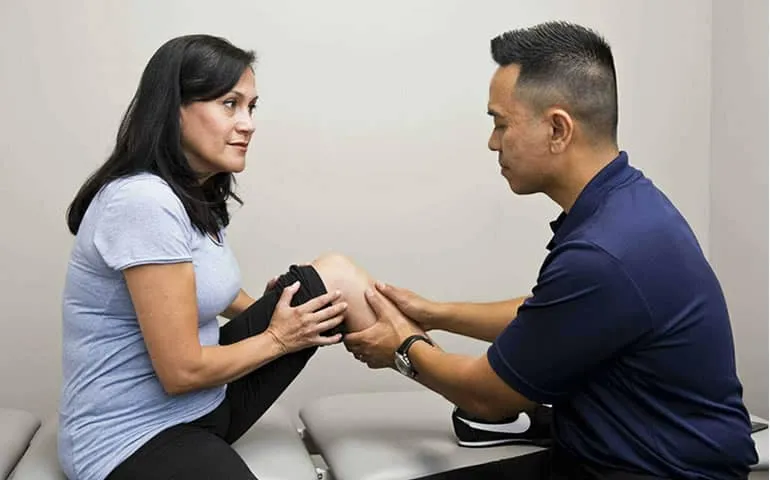
Understanding which of these structures is involved makes it much easier to understand a diagnosis and the treatment plan that follows. If you're dealing with ongoing knee pain, our physical therapists can pinpoint which of these structures is behind it and build a plan around your specific knee.