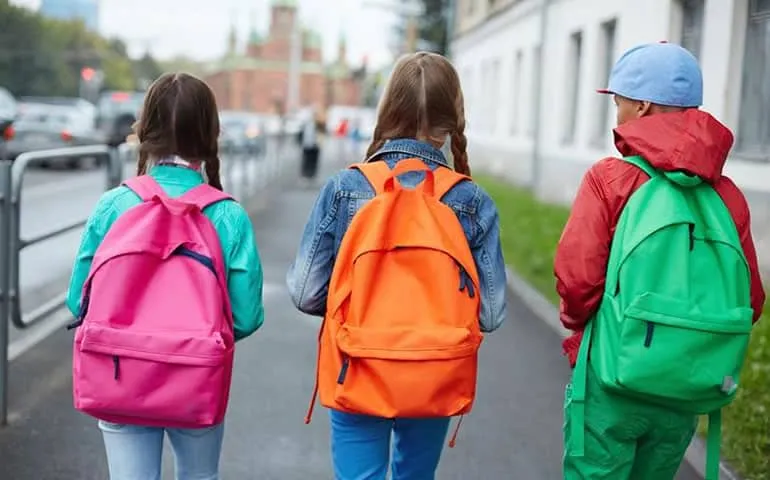
With the school year in full swing, it's worth taking a closer look at something that's easy to overlook: the backpack your child carries every day. A heavy backpack can be genuinely harmful, contributing to headaches, changes in posture, added stress on the spine, and even difficulty focusing at school.
Choosing the right backpack
Not all backpacks are built the same. For a child, look for one that's actually sized for kids, with padded shoulder straps and a cushioned back panel. Those features go a long way toward preventing the aches and pains that come from carrying weight all day.
Keeping the weight in check
The backpack's weight matters as much as its design. As a general rule, it shouldn't exceed 10–20% of your child's body weight — and when in doubt, aim for the lower end of that range. For an elementary-age student weighing 50–60 pounds, that means no more than a couple of books and a lunchbox.
Packing and wearing it right
How the backpack is packed matters too. Keep the heaviest items toward the middle, close to your child's back, so the weight is distributed evenly rather than pulling in one direction. And when it's worn, the straps should be tightened enough that the pack sits close to the back rather than hanging low — this takes pressure off the spine and shoulders.
Practical ways to lighten the load
When schools don't have lockers, backpacks can get heavy fast, especially once lunch and a water bottle are added in. Sending your child with an empty water bottle to fill up at school, or switching to a rolling backpack, are both simple ways to cut down on daily weight.
When to see a physical therapist
If your child is dealing with ongoing back or shoulder discomfort, or you're noticing changes in their posture, it's worth having it looked at rather than assuming it will resolve on its own. Our physical therapists at Empower Physical Therapy & Wellness can evaluate posture and movement concerns for patients of all ages across Chino Hills, Chino, and Pomona.