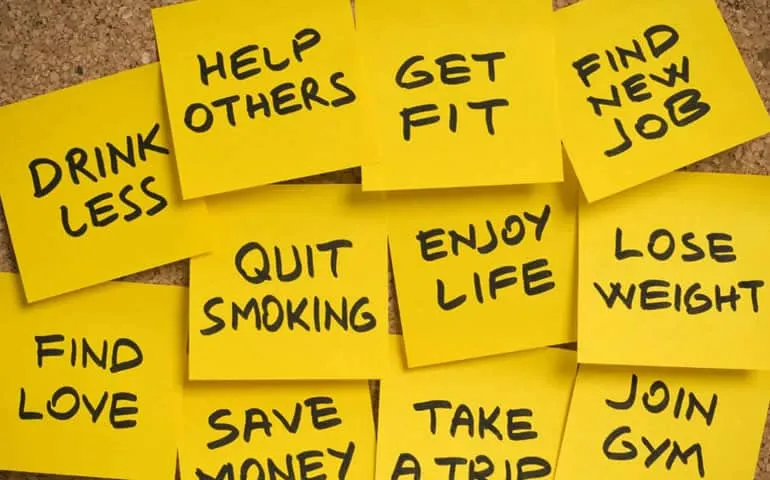
Every year brings the same wave of New Year's resolutions — goals to start doing this, stop doing that, and finally stick with it this time. And every year, a lot of people find themselves stopping early, feeling guilty about it, and repeating the same cycle the following January.
A familiar story
One patient came in mid-January and joked that her resolution this year was to finally set a resolution that wasn't about losing weight. When asked why she didn't just pick something different, she explained she'd been setting the same goal — lose 20 pounds — for about ten years running, convinced she wouldn't be happy until she finally stuck with it.
By the time she brought this up, she was carrying a decade of guilt and shame tied to a goal she hadn't reached. Many of us set goals this way — driven by a sense that we should be different, often shaped by how fitness and weight loss get advertised everywhere we look. But goals built on that kind of pressure tend to have the opposite effect on motivation than we hope, and a lot of people find their resolutions have unraveled by the second week of January.
A different kind of goal
Instead of setting the same goal again, she was encouraged to try something different: making her goal simply forgiving herself for not having reached it yet. The reasoning is straightforward — every year a goal goes unmet, it becomes harder to believe it's achievable, and the guilt around it builds.
Why being kind to yourself works better
Rather than setting out to improve yourself with goals that trigger self-criticism the moment you slip, it helps to approach the year with more patience. Slipping off track in mid-January doesn't mean you've failed — it means you can get back on track. That's easier said than done, but giving yourself room to try again, rather than counting every slip as a failure, tends to be the more sustainable path.
Making it practical
Set smaller, mini goals that build toward the larger one, and take time to notice the progress you do make along the way. It's normal to slip up sometimes — what matters is being willing to pick back up rather than abandoning the goal altogether. Over time, that approach tends to hold up far better than an all-or-nothing mindset.
When movement is part of the goal
If part of this year's goal involves moving better, managing pain, or getting back to an activity you've had to put on hold, that's something our team at Empower Physical Therapy & Wellness can help with directly — patients across Chino Hills, Chino, and Pomona work with us on exactly these kinds of goals.