If you're reading this, you probably fall into one of two groups. Maybe you recently picked up walking, jogging, or running to get back into shape, and you're just getting started. Or maybe you've loved walking, jogging, and running for most of your life, and you consider yourself a true runner. Either way, there's a good chance you share one thing in common with almost every other jogger: you worry about knee pain.
You may have already felt it, you might be scared it will come back, or it may already be at a point where it's keeping you from enjoying your runs. There is no single cause of running-related knee pain, and no single fix. But there are consistent patterns — weakness, tight muscles, training mistakes, and poor form — that tend to show up again and again. Most of these injuries don't happen overnight. There are usually signs along the way, and it's up to you to listen to them.
Listen Before It Becomes an Injury
The simplest rule: if it hurts, don't push through it. If you feel an injury coming on, take a few days off. If the discomfort goes away, ease back into your routine gradually. If it doesn't, or if you're not sure what's going on, that's the time to ask an expert rather than guess.
Ice After You Run
Spend about 10 minutes icing any nagging pain after your run. Most of the aches that show up after jogging are related to inflammation, and a cold pack helps bring down swelling and discomfort before it builds into something bigger.
Wear Supportive Shoes
Comfortable, supportive shoes matter more than most people realize. Flip-flops and flat, unsupportive shoes don't give your feet or knees the support they need to absorb the repeated impact of running. It's also worth replacing your shoes once they've racked up significant wear, since worn-out cushioning stops protecting your joints the way it used to.
Strengthen Your Core
Building strength through your abdominal and hip muscles helps support your lower body — your hips, knees, and feet. A strong core takes pressure off your legs and allows for more efficient, controlled running form, which means less repetitive strain on your knees over time.
When Knee Pain Doesn't Ease Up
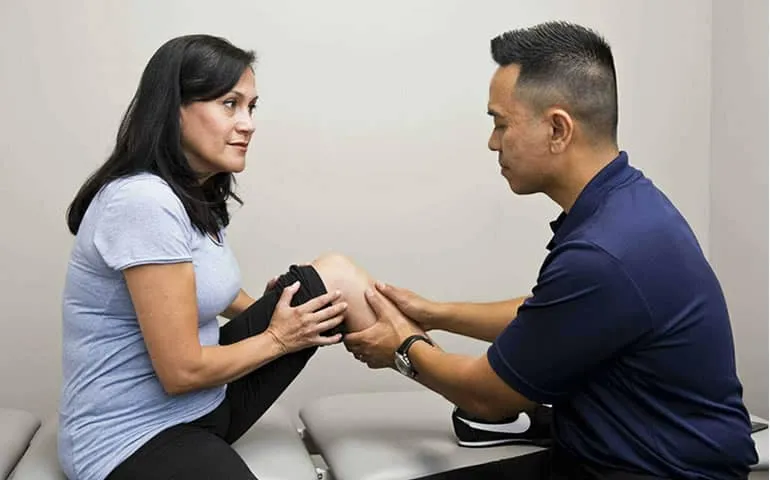
Being out in the open air, moving freely, is something worth protecting. If knee pain has you worried it might be taken away from you, know that you have options. Our physical therapists can take a closer look at your gait, strength, and training habits to figure out exactly what's driving your pain, so you can get back to enjoying your runs with a plan built around you.