Parkinson's Treatment in Chino Hills, Chino, & Pomona
A Parkinson's diagnosis can make it feel like your body is no longer fully under your control. Physical therapy will not cure Parkinson's, but it can help you move with more confidence, stability, and independence for longer.
What causes Parkinson's?
Parkinson's disease develops when the brain's supply of dopamine-producing neurons, concentrated in an area called the substantia nigra, gradually declines. Dopamine helps coordinate smooth, controlled movement, so as these cells are lost, symptoms like tremor, stiffness, and slowness begin to appear. Researchers have not identified a single cause, but a combination of genetic and environmental factors is believed to play a role. Physical therapy does not change this underlying process, but it can help your body compensate for its effects and maintain function longer.
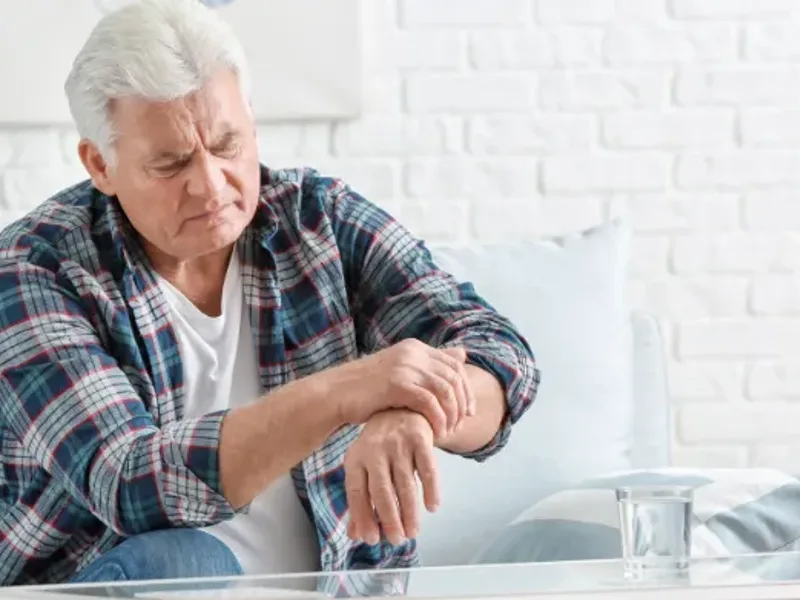
Parkinson's symptoms appear once a substantial portion of the dopamine-producing cells in the substantia nigra have been lost. Dopamine is essential for smooth communication between the brain and the muscles, so as levels drop, movement becomes slower, smaller, and harder to initiate.
Many people with Parkinson's develop abnormal clumps of a protein called alpha-synuclein, known as Lewy bodies, inside brain cells. These clumps are believed to disrupt normal cell function and contribute to the progressive loss of dopamine-producing neurons, though researchers are still working to fully understand the process.
A small percentage of Parkinson's cases are linked to specific inherited gene mutations, and having a close relative with the condition can modestly increase risk. For most people, though, Parkinson's develops without a clear inherited pattern.
Research has associated long-term exposure to certain pesticides and industrial chemicals with a higher likelihood of developing Parkinson's, though no single environmental cause has been confirmed. This is considered one of several contributing risk factors rather than a direct cause.
Parkinson's most commonly develops after age 60, and the likelihood of diagnosis increases with age. This is thought to reflect the natural, gradual decline of dopamine-producing neurons that occurs over a lifetime, which happens faster or more significantly in people who develop the disease.
As Parkinson's progresses, symptoms like rigidity, reduced arm swing, and shuffling steps can create their own downstream problems, including muscle stiffness, poor balance, and deconditioning. These secondary changes are often the part of the condition most responsive to physical therapy, even though therapy cannot address the underlying neurological cause.
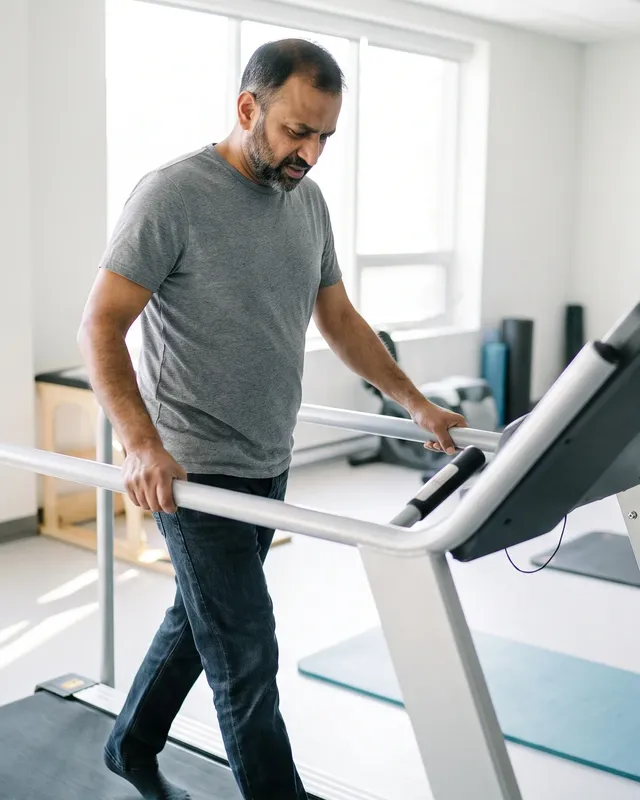
How physical therapy in Chino Hills helps.
Physical therapy cannot slow or reverse the underlying neurological changes of Parkinson's, but it plays a real role in helping you stay mobile, steady, and independent for as long as possible. We start with a thorough assessment of your gait, balance, strength, and movement patterns to understand exactly where the disease is affecting your daily function. From there, treatment focuses on the things that consistently help: big, deliberate movement training, gait and balance work to reduce fall risk, and strengthening to counter the stiffness and deconditioning that come with reduced activity. You work with the same therapist every visit, so your program adapts as your needs change rather than following a fixed script. The goal is never a cure, it is helping you move through your day with more control and confidence.
What to expect from your recovery.
Evaluation and baseline movement assessment
We assess your gait, balance, strength, and functional movement to establish a clear baseline and identify your specific fall risks and mobility limitations. This becomes the reference point we use to track your progress over time.
Hands-on and targeted movement training
Treatment focuses on big, deliberate movement patterns, along with hands-on work to manage rigidity and maintain joint mobility. Sessions are built around the tasks that matter most in your daily life.
Progressive strength, balance, and gait training
We build strength and balance reserve to help reduce fall risk and support your independence, adjusting the program as your needs evolve. This is ongoing work aimed at maintaining function, not a fixed endpoint.
As a deaf patient, communication is very important to me, and they went above and beyond to make sure I felt comfortable and understood. The staff were patient, attentive, and made every session easy to follow.
Pain rarely travels alone.
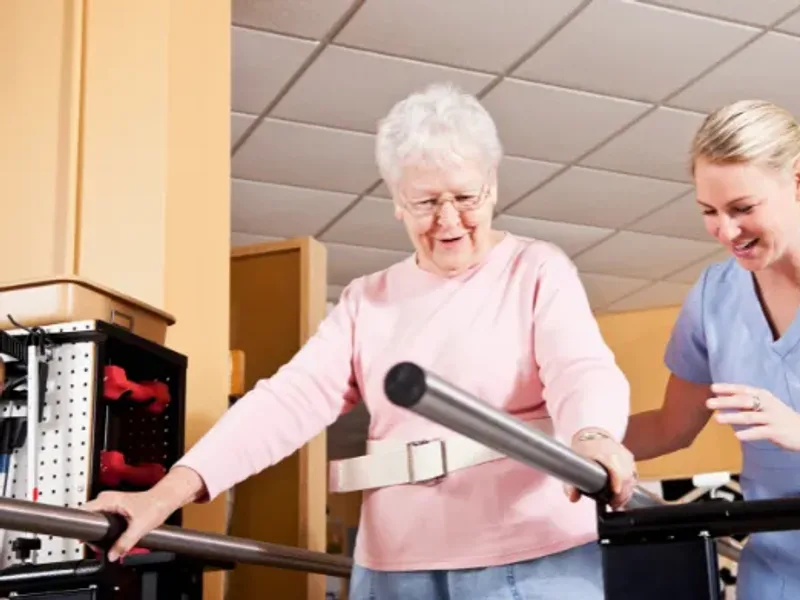
Balance & Gait Disorders
Balance and walking changes are common as Parkinson's progresses. We train both together to help reduce fall risk.
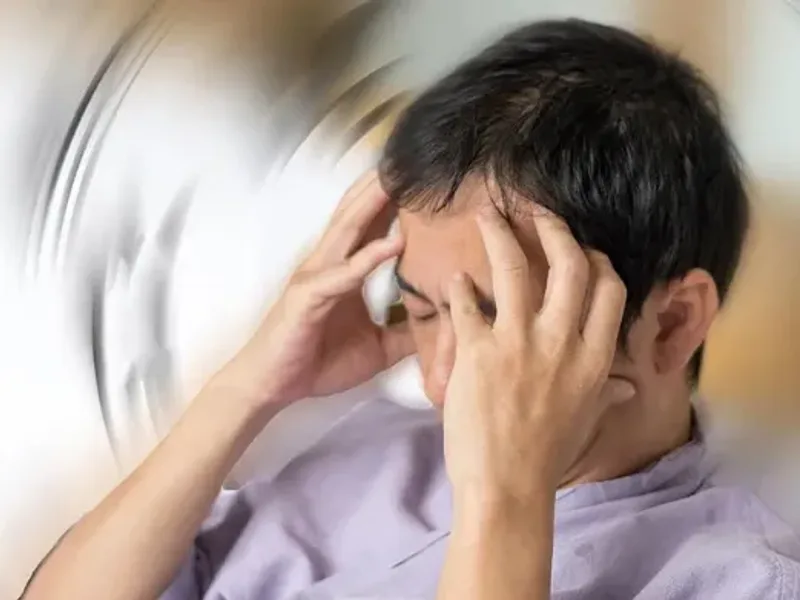
Dizziness & Vertigo
Dizziness can complicate the balance challenges that come with Parkinson's. We evaluate carefully to address both.
Stroke
Parkinson's and stroke can both affect movement and balance in similar ways. Our neurological rehab approach applies to both conditions.